
Periodic Employee Assessments

Ongoing reliability review after hiring

PLUTVO helps organizations run periodic employee assessments during employment, not only before hiring. The goal is to identify irregularities, reliability concerns and topics that require professional review before they become operational, financial or information-security risks.

What is a periodic employee assessment?

It is a structured assessment performed for existing employees at defined intervals or before sensitive role changes. It gives the organization a controlled way to review reliability indicators, internal-risk signals, reporting habits and issues that may require clarification while respecting privacy and authorization rules.
What it should not be

A periodic assessment is not a tool for surveillance, pressure or automatic punishment. It is a structured review mechanism for authorized professionals, used according to law, internal policy and the sensitivity of the role.

Fully web-based. No installation required.

Fully web-based. No installation required.

The candidate completes the assessment through a secure browser link. There is no need to install software, download an app or involve IT support. The process works from a computer, tablet or mobile device, according to the organization’s assessment settings.

Secure personal link
Works directly in the browser
No software installation
Suitable for desktop and mobile

Methods used in periodic review

The assessment can be focused and digital, or combined with additional verification when findings require context. PLUTVO organizes the process into a clear report for authorized reviewers.

Scheduled digital assessment

Employees receive a secure browser link and complete the assessment without software installation.

Role and sensitivity profile

The topics, thresholds and review permissions can be adapted to departments, access levels and job sensitivity.

Reliability and conduct indicators

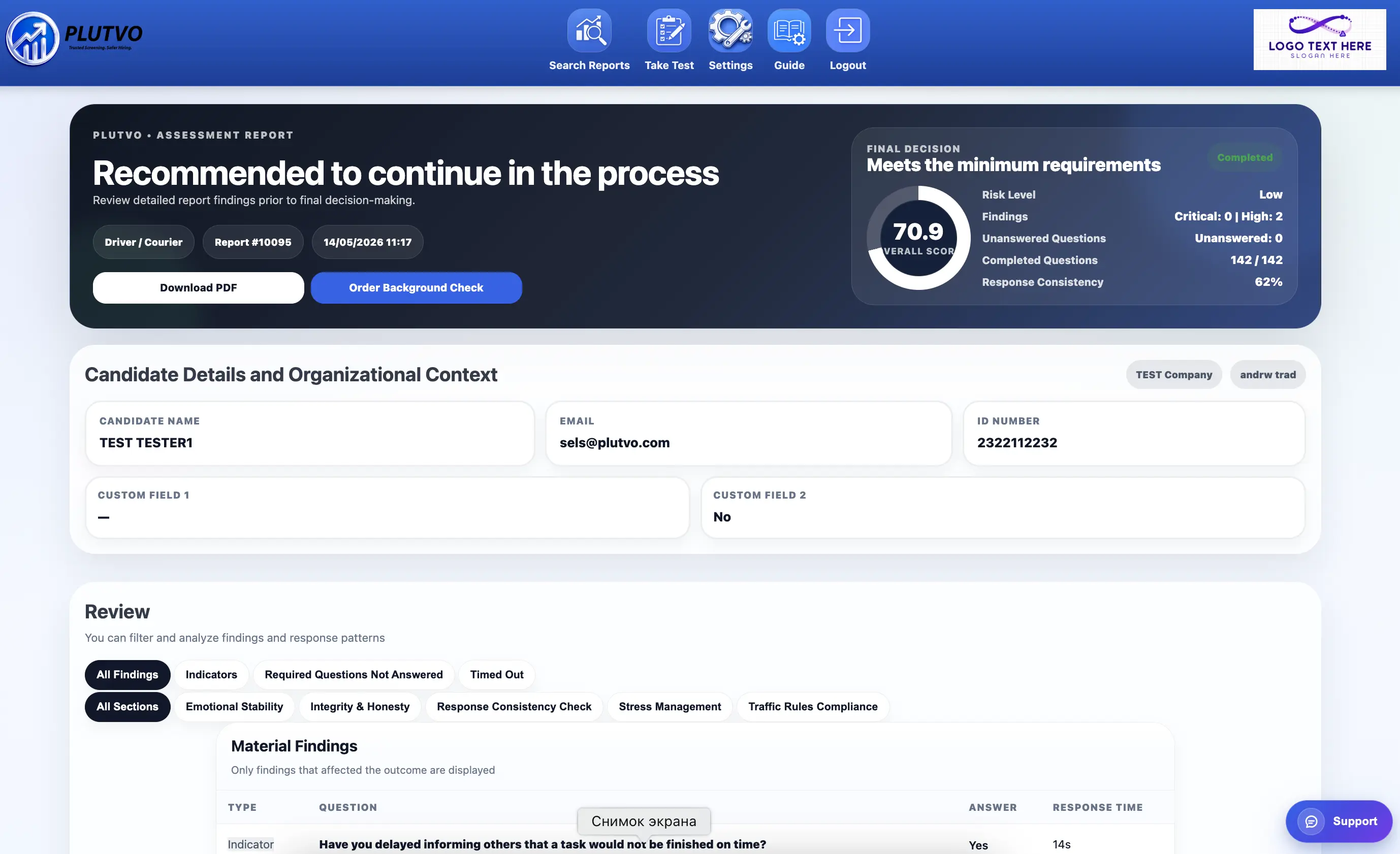
The report highlights patterns related to reliability, reporting, consistency, internal conduct and topics requiring attention.

Irregularity and concealment signals

Answers and patterns that may indicate inconsistency, concealment or internal-risk topics are flagged for professional review.

Clarification and integrity interview

When report findings require context, the organization can continue with a structured clarification conversation.

Trend and population comparison

When used across cycles, aggregated data can support management insight without exposing unnecessary personal data.

How it works

The organization defines who should be assessed, how often, which topics are relevant and who may review the results.

01

Define the cycle

Select departments, roles, frequency, language and authorization rules.

02

Invite employees securely

Employees receive a personal link by email and complete the assessment online.

03

Review indicators

The system organizes findings by topic, severity and review priority.

04

Clarify and act

Authorized reviewers decide whether to close the review, clarify findings or add a complementary check.

Available options

Use one focused cycle or build a broader monitoring framework according to the role, internal policy and legal requirements.

Annual / periodic review

A recurring assessment cycle for defined roles, departments or access groups.

Sensitive-role reassessment

Additional review before granting access to sensitive systems, data, finance or security-related duties.

Department-level insight

Aggregated, permission-based insight into risk themes and process gaps across teams.

Follow-up clarification

Structured follow-up for findings that require context before any managerial action.

Video question layer

When configured, the assessment may include video questions for professional review by authorized users.

Complementary checks

Background re-check, CV verification or integrity interview when legally appropriate and relevant.

What the organization receives

What the organization receives

The output is a clear management report for authorized reviewers. It is designed to support review, clarification and internal documentation.

  • Executive summary and assessment status
  • Indicators by topic, severity and priority
  • Findings that may require clarification
  • Trend / cycle comparison when available
  • Recommended follow-up actions for authorized reviewers

Responsible use during employment

Periodic assessments should be proportionate, role-related, authorized and documented. They should support professional judgment, not replace it, and should be reviewed according to law, privacy requirements and internal policy.

Build the right assessment flow for your organization

Tell us which departments, roles or access groups require ongoing review. We will help define a clear, lawful and practical periodic assessment process.

Talk to an Expert